10 Curtain Bangs Styles Behind Today’s Most Viral Haircuts
Hey friends, it’s Nadia! 💫
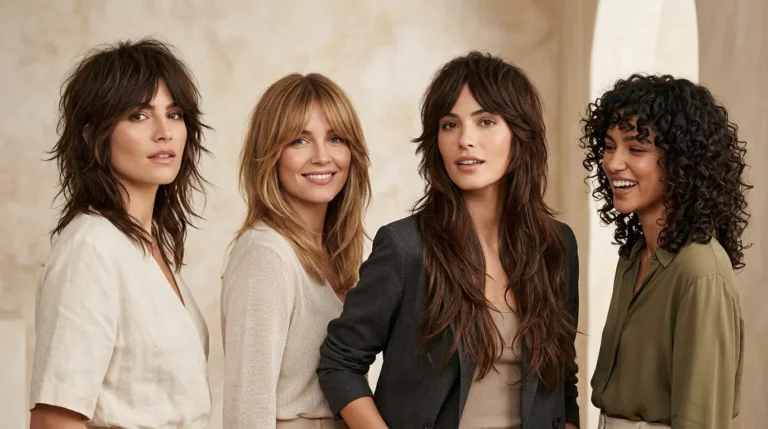
The more viral haircuts I research, the more I notice the same detail showing up again and again, curtain bangs. They’re the signature of the wolf cut, a defining feature of the butterfly cut, and honestly one of the most requested standalone styles on their own. If there’s one small change that instantly updates almost any haircut, this is it.
Here’s everything about curtain bangs, and the many different ways people are wearing them.
What Makes Curtain Bangs So Universally Loved
- They part naturally down the middle. Unlike a blunt fringe, curtain bangs are designed to swoop open, framing the face on both sides.
- They work with nearly any length. From a pixie to long hair, curtain bangs adapt to almost any haircut.
- Low commitment, high impact. They’re one of the easiest ways to change your whole look without cutting significant length.
- They soften and balance features. The face-framing swoop can elongate round faces and soften angular ones.
10 Ways to Wear Curtain Bangs
1. Classic Curtain Bangs

Why it works: Bangs that part naturally in the center and sweep to each side create the most universally recognized version of this style.
- What to ask for: Bangs cut slightly longer at the outer edges, shorter toward the center part.
- Best for: Nearly every face shape and hair type.
- Styling tip: Round-brush blow-dry each side outward and slightly back for the classic swoop.
Why you love this: It’s the most flattering, foolproof version of this style. You get face-framing softness that works no matter your hair type.
2. Curtain Bangs with a Wolf Cut
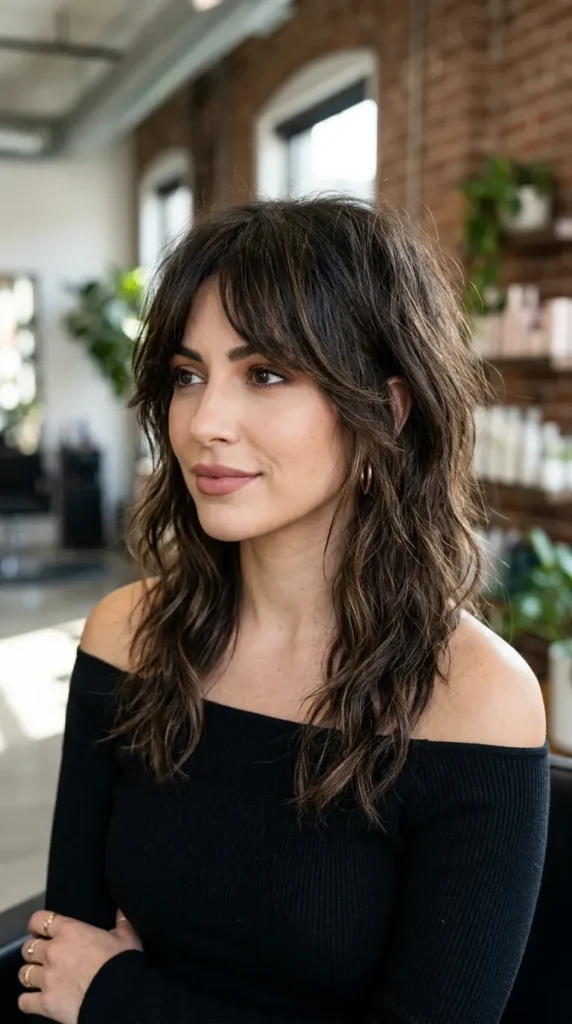
Why it works: Paired with a wolf cut’s choppy layers, curtain bangs become part of a genuinely iconic, edgy combination.
- What to ask for: Curtain bangs blended directly into the wolf cut’s shorter front layers.
- Best for: Anyone going for the full viral wolf cut look.
- Styling tip: Style with a texturizing product to keep the bangs from looking too polished against the choppy layers.
Why you love this: It completes one of the most recognizable haircuts trending right now. You get the signature detail that makes the whole cut click into place.
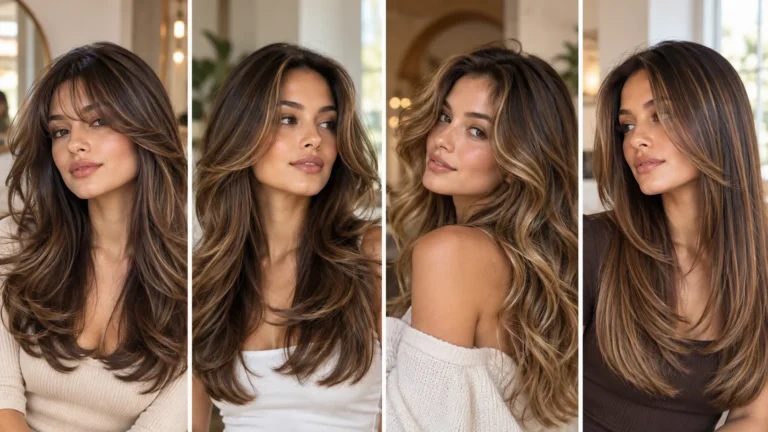
3. Curtain Bangs with a Butterfly Cut
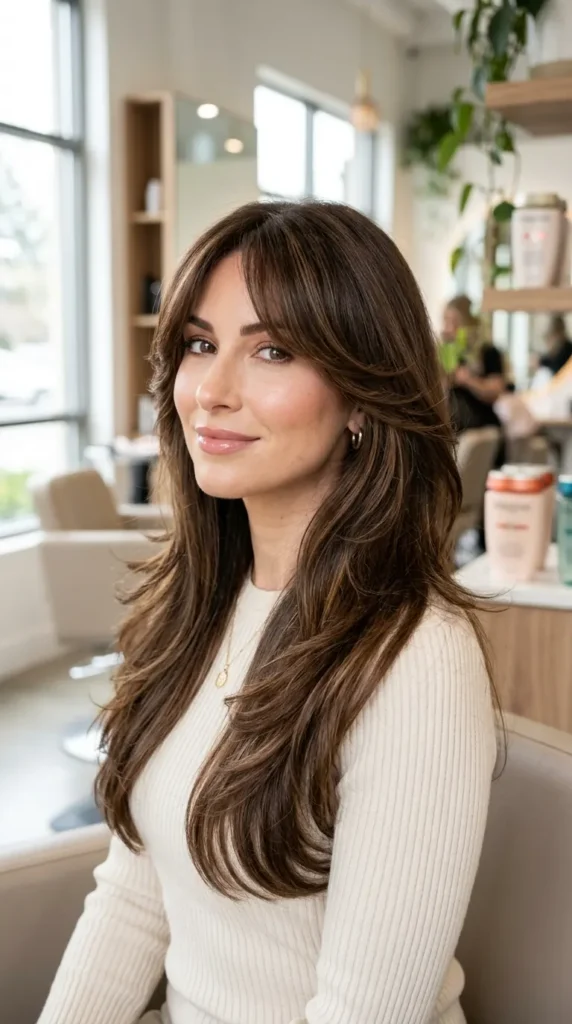
Why it works: Soft, feathered curtain bangs blend seamlessly with a butterfly cut’s face-framing layers for a polished, cohesive look.
- What to ask for: Curtain bangs cut to blend with the rest of your butterfly layering rather than as a separate, distinct piece.
- Best for: Anyone going for the full soft, polished butterfly cut look.
- Styling tip: Round-brush both the bangs and the surrounding layers together for one seamless shape.
Why you love this: It creates a completely cohesive, blended silhouette. You get softness and movement working together from every angle.
4. Curtain Bangs on Straight Hair

Why it works: On straight hair, curtain bangs need a deliberate styling routine to hold their swooped shape throughout the day.
- What to ask for: Bangs cut with enough length to swoop, since very short bangs on straight hair tend to fall flat rather than curve.
- Best for: Straight hair wanting a face-framing update.
- Styling tip: A round brush blowout is essential here, air-drying alone often won’t create the swooped shape.
Why you love this: It brings movement to hair that might otherwise stay one-dimensional. You get softness and shape with just one added detail.
5. Curtain Bangs on Curly Hair
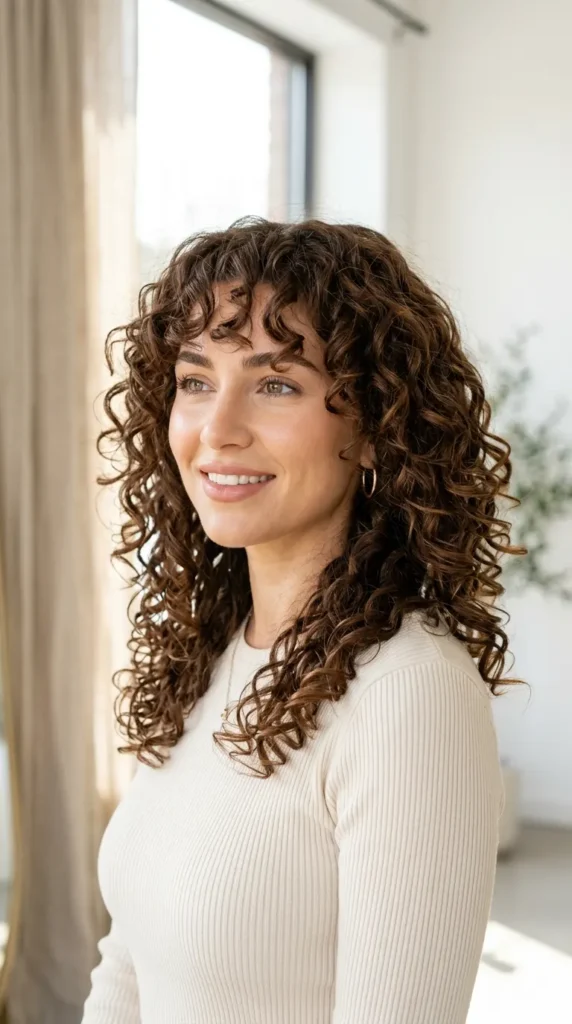
Why it works: Curly hair often styles curtain bangs into natural, effortless-looking pieces without needing much daily maintenance.
- What to ask for: Bangs cut dry, specifically adapted to how your curl pattern naturally falls.
- Best for: Naturally curly or wavy hair.
- Styling tip: Twist the bangs slightly with a curl cream on wet hair to encourage them to curve outward as they dry.
Why you love this: It works with your natural texture instead of fighting it. You get face-framing softness that requires minimal daily styling.
6. Curtain Bangs Pulled Back
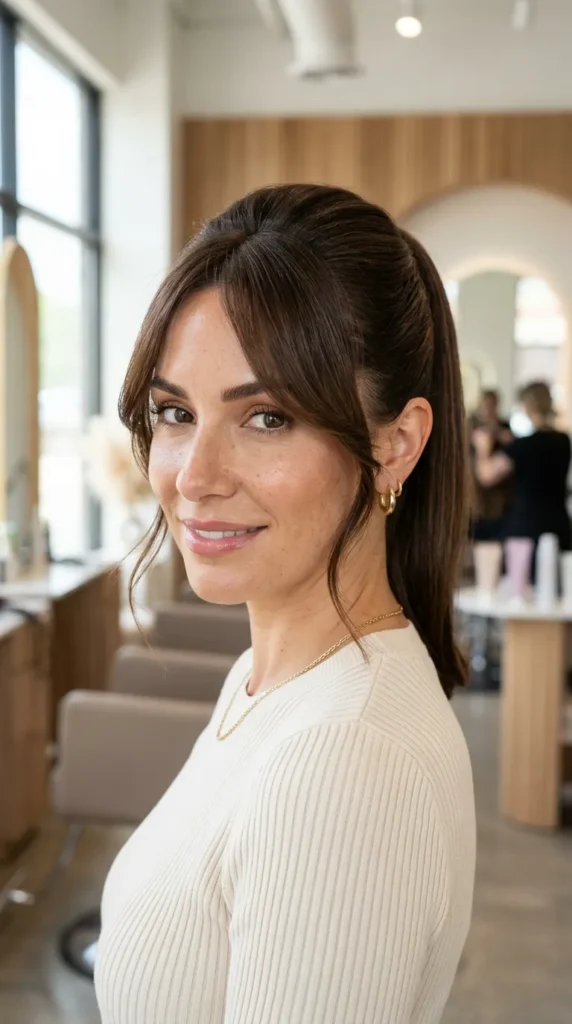
Why it works: Even pulled back into a ponytail or bun, longer curtain bangs can be styled to still frame the face rather than disappearing entirely.
- What to ask for: Nothing extra, this is a styling approach for existing curtain bangs.
- Best for: Showing off the face-framing effect even with your hair up.
- Styling tip: Leave the bangs out of the ponytail elastic and curl them slightly to maintain the framing effect.
Why you love this: It proves curtain bangs work in nearly every styling situation. You get face-framing softness whether your hair is up or down.
7. Grown-Out Curtain Bangs
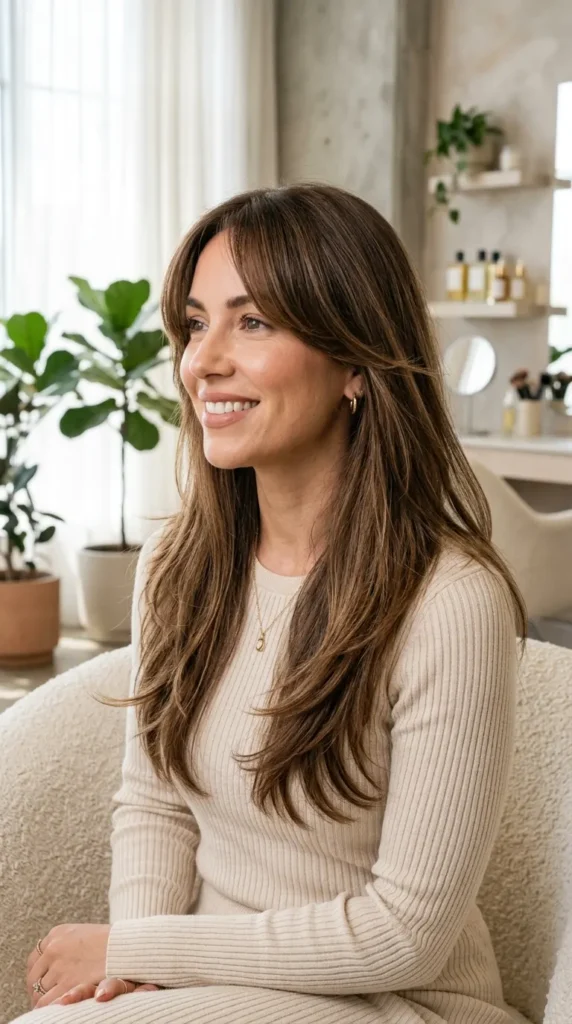
Why it works: As curtain bangs grow past chin length, they naturally blend into face-framing layers, extending the style’s usefulness well beyond a typical bang cycle.
- What to ask for: No urgent trim needed, simply let them grow and blend naturally into the rest of your length.
- Best for: Anyone wanting to transition away from bangs without an awkward growing-out phase.
- Styling tip: A few face-framing layers cut in during this growing-out period help the transition look intentional.
Why you love this: It’s one of the most forgiving bang styles to grow out. You get a graceful transition rather than an awkward in-between stage.
8. Short Curtain Bangs
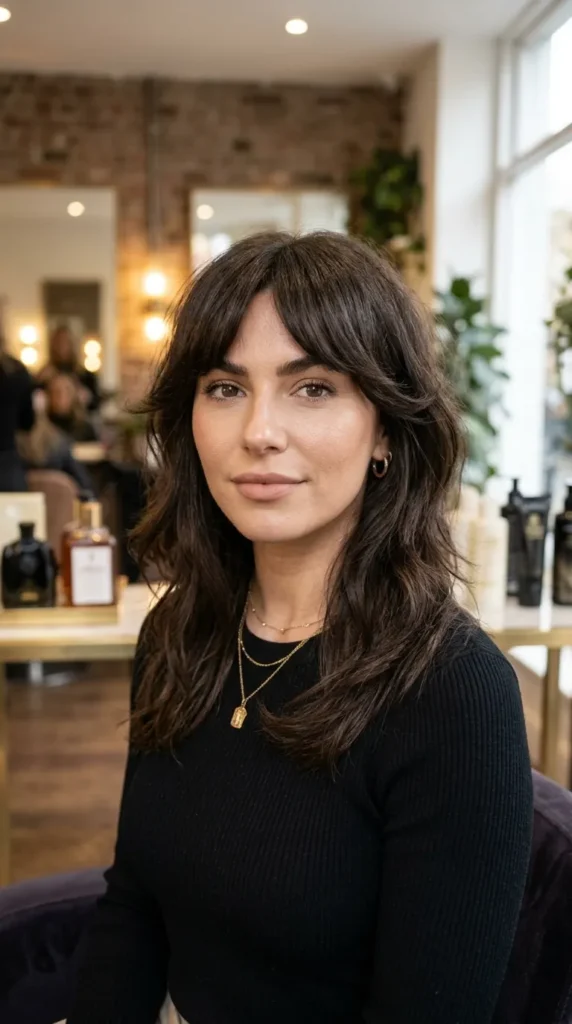
Why it works: A shorter version, hitting above the brow, creates a bolder, more editorial take on this typically soft style.
- What to ask for: Curtain bangs cut shorter than the classic version, hitting closer to the eyebrows.
- Best for: Anyone wanting a more dramatic, statement-making version of the trend.
- Styling tip: Use a small round brush for extra control styling the shorter length.
Why you love this: It’s a bolder, more fashion-forward take on a classic style. You get drama and face-framing softness in one shorter cut.
9. Long Curtain Bangs
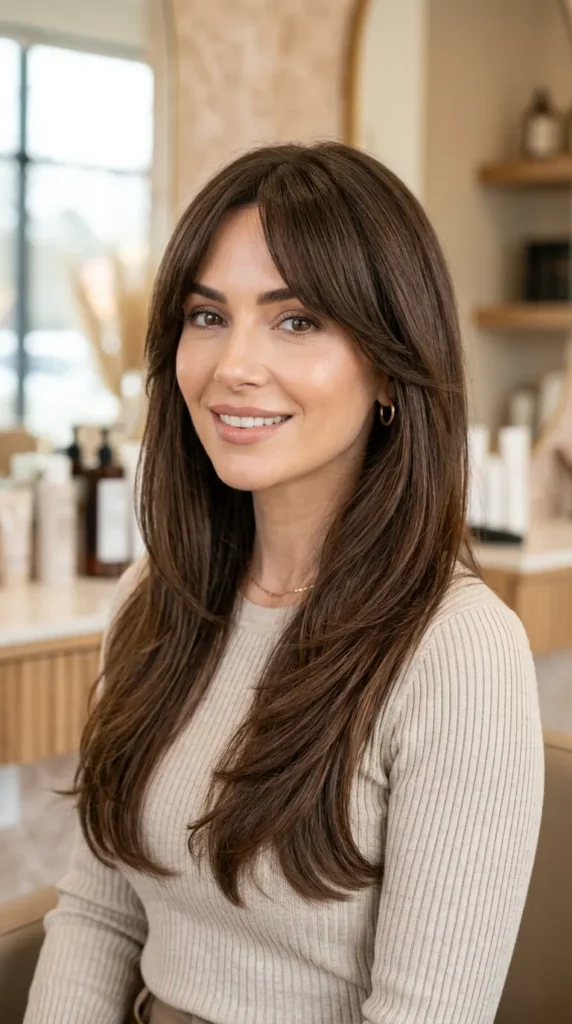
Why it works: Extending the length of curtain bangs to cheekbone or chin level creates the softest, most subtle version of this trend.
- What to ask for: Bangs cut long enough to blend almost seamlessly with the rest of your hair.
- Best for: Anyone wanting the effect without it reading as an obvious “bang” cut.
- Styling tip: These require the least daily styling since their length naturally falls into place.
Why you love this: It’s the gentlest possible introduction to bangs. You get softness and face-framing with almost no maintenance required.
10. Curtain Bangs with Money Piece Highlights

Why it works: Adding lighter, brighter highlights specifically to the curtain bang pieces draws even more attention to your face.
- What to ask for: Highlights concentrated on the curtain bang sections rather than throughout your whole head.
- Best for: Anyone wanting to brighten their face without a full head of highlights.
- Styling tip: Ask your colorist to place the lightest pieces exactly where the bangs will fall against your face.
Why you love this: It combines two of the most flattering face-framing techniques into one. You get brightness and softness working together right where it matters most.
Nadia’s Editor Picks
- Most universally flattering: Classic Curtain Bangs
- Best for growing out gracefully: Grown-Out Curtain Bangs
- Lowest maintenance: Long Curtain Bangs
- Most dramatic: Short Curtain Bangs
- My personal favorite: Curtain Bangs with Money Piece Highlights, since it combines two flattering techniques into one
Common Curtain Bang Mistakes to Avoid
- Cutting them too short for your hair type. Very short bangs on straight, fine hair often fall flat rather than swooping, ask your stylist about the right length for your texture.
- Skipping the round-brush routine. Curtain bangs rely heavily on this styling technique, especially on straight hair, to hold their shape.
- Not accounting for cowlicks. If you have a strong cowlick near your hairline, mention it before cutting so your stylist can plan around it.
- Forgetting they need regular trims. Bangs grow into your eyes faster than the rest of your hair, plan on a trim every 3 to 4 weeks to maintain the shape.
FAQ
Do curtain bangs work on every face shape? Yes, this is part of why they’re so universally popular, the center part and outward swoop genuinely flatters most face shapes by softening and framing features.
How long does it take to grow out curtain bangs? Since they blend naturally into face-framing layers as they grow, most people find curtain bangs one of the easier bang styles to grow out gracefully, often within several months.
Can curly hair have curtain bangs? Yes, curly hair often styles curtain bangs beautifully with minimal effort, since the natural curl pattern helps them curve outward on its own.
Final Thoughts
Curtain bangs earned their spot as the common thread behind nearly every trending haircut because they simply work, on almost any face shape, hair type, and length. Whether you pair them with a wolf cut, a butterfly cut, or wear them entirely on their own, this is one detail worth bringing to your next salon visit.
Looking for More Beauty Inspiration?
Don’t stop at just one haircut idea! If you’re deciding which viral cut to pair these bangs with, my Wolf Cut and Butterfly Cut posts break down the two most popular options in detail, and my 13 Fall 2026 Haircut Trends roundup has even more layered cuts to consider.
Visit the Nadia Daily Living homepage for our latest hairstyle trends, nail art collections, fashion guides, beauty tips, and lifestyle inspiration.
Happy styling! — Nadia James